
What Is Sprunki Phase 7?
Sprunki Phase 7 is the most technically evolved phase in the Sprunki series. Not because it is the scariest — Phase 4 holds that title. Not because it introduced the dark aesthetic — Phase 3 did that. Phase 7 matters because it is the first phase where every single slot contributes something no other slot can replace. Seven layers: each one a distinct frequency band, a distinct character category, a distinct job in the mix. Fill all seven and the track does not get muddy. It gets cinematic.
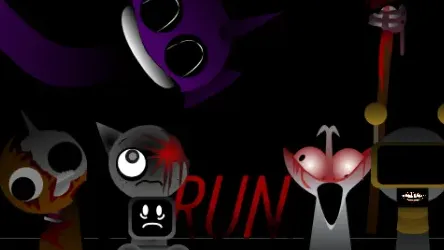
Built by samerysio on Scratch, the visual aesthetic is neon-lit horror — dark corridors lit by glowing characters, glitch effects that fracture across the stage, animations that sync to every beat and bass hit. The sound engine is the deepest in the series: cinematic synths that swell and recede, deep bass that rumbles at frequencies you feel more than hear, and horror whispers that sit underneath everything like a second track playing in reverse. Five variants expand the ecosystem: Core, Remastered, Reimagined, The Rework, and IMB Definitive. Free in any browser. No download. No account. Just open and go seven deep.
Sprunki Phase 7 Key Features
7-layer discrete mixing
Seven slots, seven frequency bands — sub, low-mid, mid, high-mid, high, air, wildcard. Wrong slot = mix fights itself. Correct slot = cinematic width. Sprunki Phase 7's signature mechanic.
Neon horror visuals
Black backgrounds, glowing outlines, glitch fractures, beat-synced animations. Sprunki Phase 7 characters react to the beat, to each other, to the mix intensity.
Cinematic sound engine
Built for headphones. Sub-bass, stereo-width synth sweeps, edge-panned horror whispers. Laptop speakers miss half the Sprunki Phase 7 mix.
Five variants
Core, Remastered (HD visuals), Reimagined (darker), The Rework (full horror), IMB Definitive (largest roster). Same 7-layer engine, different characters and sound libraries.
How to Play Sprunki Phase 7
- 1
Anchor the low end (Slot 1-2)
Place your beat character in Slot 1 (sub) and your bass character in Slot 2 (low-mid). These two slots form the rhythmic and harmonic foundation of every Sprunki Phase 7 track — get them wrong and everything stacked on top will feel unstable no matter how well you place the upper slots. Choose a beat with a clear, consistent pulse and a bass line that complements rather than competes with it. If the low end clashes, the entire mix collapses, so spend extra time auditioning different beat-and-bass pairings before moving upward through the frequency spectrum.
- 2
Build upward (Slot 3-6)
With the low end anchored, build upward through the frequency spectrum: melody in Slot 3 (mid), synth or harmony in Slot 4 (high-mid), detail and texture in Slot 5 (high), air and atmosphere in Slot 6 (air). Each slot occupies a specific frequency band, and placing a sound in the wrong slot creates frequency masking — a bass in Slot 5 gets swallowed and leaves the high end empty, while a melody in Slot 2 competes with your bass and muddies the entire foundation. Think of the seven slots as a mixing board where position determines EQ, and build from the bottom up one layer at a time.
- 3
Slot 7 = wildcard
Slot 7 is the wildcard — unlike Slots 1 through 6, it has no assigned frequency band and can accept any character type without causing frequency clashes. This flexibility makes it the most creative slot on the board. Use it for vocals, horror whispers, a second melody, or a percussive detail that does not fit neatly into the other six bands. The best approach is to fill Slots 1 through 6 first, listen to what the mix is missing, and use Slot 7 to fill that gap — a vocal hook, an atmospheric pad, or a rhythmic accent that sits in the space between the other layers.
Sprunki Phase 7 Tips
Frequency placement is a puzzle
The 7-layer system is not a suggestion. Put a melody in the bass slot and it gets swallowed. Put a beat in the air slot and it sounds hollow. Spend your first session just experimenting with slot placement — put the same character in different slots and hear how the mix changes. Understanding the frequency map is the single biggest skill gap in Sprunki Phase 7.
Three well-placed beat seven random
Phase 7 rewards precision over quantity. A bass in Slot 2, a melody in Slot 3, and a wildcard vocal in Slot 7 — with four empty slots — sounds cleaner and more cinematic than seven characters crammed into the wrong frequencies. Empty slots are not a failure. They are headroom.
Headphones required
Phase 7's sub-bass, stereo sweeps, and edge-panned whispers are invisible on laptop speakers. A mix that sounds thin on speakers might be full on headphones — and vice versa. Over-ear headphones reveal the full frequency range the cinematic sound engine was built to deliver.
Sprunki Phase 7 FAQ
How do the 7 frequency slots work in Sprunki Phase 7?
Each of the seven stage slots in Sprunki Phase 7 is assigned a specific frequency band — sub, low-mid, mid, high-mid, high, air, and a wildcard slot with no fixed frequency. This is not a cosmetic label; the engine actively separates sounds by frequency, so putting a bass-heavy character in the high slot produces a hollow, anemic result, while placing a melody in the sub slot gets it swallowed by the low end. Correct placement — beat in Slot 1, bass in Slot 2, melody in Slot 3, and so on — opens the track into full cinematic width with every layer sitting in its own sonic space and nothing competing for the same frequencies. No other Sprunki phase has this level of audio engineering built directly into its drag-and-drop interface. The frequency map rewards precision and punishes carelessness in equal measure, which is why mastering slot placement is the single most important skill in Phase 7.
What is the difference between Sprunki Phase 6 and Sprunki Phase 7?
Phase 6 introduced seven-slot layering, but treated each slot as functionally identical — any character could go anywhere without meaningful sonic consequence. Sprunki Phase 7 completely rebuilds that system by assigning every slot a discrete frequency band with a defined sonic role, turning the seven slots from interchangeable containers into a structured mixing board where position determines EQ. The sound engine moves from functional beatmaking to cinematic production, with synth swells, sub-bass rumbles, and stereo-width separation that Phase 6 never attempted. Visually, Phase 7 shifts from dark horror to neon-lit horror — black backgrounds illuminated by glowing character outlines, glitch fractures that pulse with the beat, and character animations that react to mix intensity. Phase 7 also offers five distinct variants (Core, Remastered, Reimagined, The Rework, and IMB Definitive), each with its own character roster and sound library, compared to Phase 6's two or three. The jump from Phase 6 to Phase 7 is not a minor iteration — it is a ground-up reimagining of what seven-slot mixing can be.
Which Sprunki Phase 7 variant should I start with?
Start with Core Phase 7 to learn the 7-layer frequency system in its purest form — the standard roster, the baseline sound library, and the clearest demonstration of how slot placement affects the mix. Once you are comfortable with frequency mapping, try Remastered for upgraded HD visuals that sharpen the neon-lit aesthetic and refined audio that adds depth and clarity to every frequency band. Reimagined takes the atmosphere darker with a moodier visual palette and remixed sound packs that push the cinematic engine toward tension and unease. The Rework is built for horror fans — it features the deepest sub-bass, the most aggressively distorted textures, and the most unsettling character designs in any Phase 7 variant. Finally, IMB Definitive offers the largest character roster, an enhanced sound library, and hidden lore elements scattered throughout the interface for completionists who want to explore every corner of what Sprunki Phase 7 has to offer. Each variant keeps the core 7-layer frequency engine intact, so skills transfer perfectly between them no matter which one you choose first.
How many variants does Sprunki Phase 7 have?
Sprunki Phase 7 ships with five major variants, each offering a distinct take on the 7-layer experience. Core is the standard version with the baseline roster and sound library, designed to teach the frequency system without distraction. Remastered upgrades the visuals to HD and refines the audio mix for improved clarity and stereo separation. Reimagined takes a darker approach with a moodier color palette, remixed sound packs, and an atmosphere tilted toward tension and unease. The Rework is the full-horror variant — deepest bass, most distorted textures, and the most aggressively unsettling character designs in the Phase 7 ecosystem. IMB Edition DEFINITIVE rounds out the set with the largest character roster, an expanded and enhanced sound library, and hidden lore elements woven through the interface for completionists. All five variants share the same 7-layer frequency engine at their core, so once you understand slot placement in one variant, that knowledge carries over to every other variant seamlessly.
Who created Sprunki Phase 7?
Sprunki Phase 7 was created by samerysio, a prominent community developer on the Scratch platform who has become one of the most recognized names in the Sprunki modding scene. Like all Sprunki phases, Phase 7 is a fan-made community project — it is not developed by, affiliated with, or endorsed by So Far So Good, the French studio behind the original Incredibox. The entire Sprunki ecosystem, from Phase 1 through Phase 7 and beyond, exists as a community-driven creative movement built by dedicated fans who wanted to push the Incredibox formula into darker, more technically sophisticated territory. samerysio's work on Phase 7 is particularly notable for introducing the discrete frequency band system — a level of audio engineering sophistication rarely seen in browser-based music creation tools, let alone fan mods built on Scratch.
Why Players Love Sprunki Phase 7
Sprunki Phase 7 is the most technically evolved phase in the series. It does not rely on shock value or horror spectacle — it rewards precision. Every slot has a job. Every frequency band matters. Three well-placed characters sound better than seven random ones. The 7-layer frequency system turns music creation into a puzzle where the solution is a cinematic track. Whether you are a beginner dropping beats into slots or a music teacher using it to demonstrate mixing concepts, Phase 7 meets you at your level and rewards every bit of effort you put in.
Comments